
The air we share has begun to feel thicker, summers last longer, storms gather fury in hours rather than days, and yet the heat we measure in degrees is only half the story. Beneath every temperature spike lies a human pulse, a set of lived realities that reveal how Social justice is inseparable from the science of planetary warming. The questions of who breathes the dirtiest air, who has the most fragile housing, who must choose between paying the utility bill and buying food—these are the questions that turn the abstract curve of climate projections into an urgent moral landscape.
When the World Heats Up, Inequality Becomes Visible
Climate scientists track parts per million of carbon dioxide, but residents of low-income neighborhoods track asthma inhaler refills and emergency room visits. In many cities, heat-mapping projects show temperature differences of up to 7 °C between leafy suburbs and concrete-laden inner districts. Such disparities illustrate how Social justice intersects with environment: the hotter the block, the fewer the trees, the poorer the household, the slimmer the margin for error when a heatwave strikes.
Frontline Communities and the Cost of Adaptation
- Fisherfolk watching catch sizes dwindle as ocean currents shift.
- Farmworkers enduring 40 °C fields without legal guarantees of shade or water breaks.
- Urban elders confined to upper-floor apartments where air conditioners, if they exist, guzzle more power than fixed incomes can cover.
These frontline communities carry climate burdens they did not create. The fairness gap is not a side effect of warming; it is the central drama. Tackling Social justice therefore means tackling Climate change and vice versa.
The Environment as a Mirror of Justice
The way a neighborhood looks can tell you almost everything about its ability to survive a climate-intensified century. Parks, community gardens, permeable sidewalks, and accessible public transit become forms of protection as much as amenities. Where they are missing, extreme weather bites hardest. When investments flow only to already well-resourced districts, the climate resilience ledger stays brutally unbalanced. Observing who benefits from green infrastructure budgets is a direct study in Social justice.
Climate Change Policy Through a Justice Lens
Good policy recognizes that the atmosphere is a shared commons but the harms of its destabilization are profoundly uneven. A justice-driven approach includes:
- Targeted retrofits for public housing and low-income homes, increasing energy efficiency and slashing utility costs.
- Inclusive transit planning that reduces car dependency and guarantees affordable mobility during evacuations.
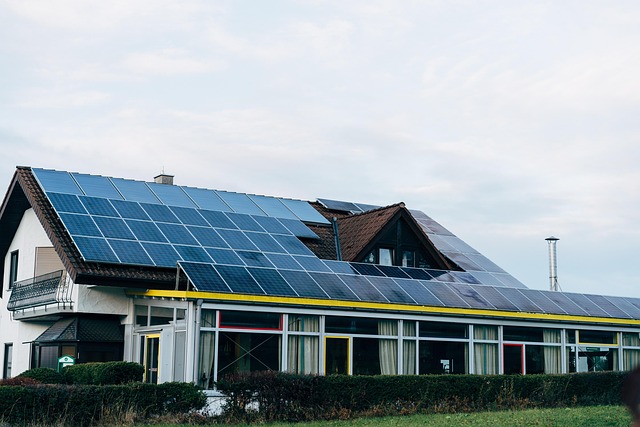
- Community-owned renewable projects that allow marginalized neighborhoods to capture economic benefits from the energy transition.
- Legal safeguards that protect Indigenous land rights and traditional ecological knowledge, strengthening stewardship of carbon-rich ecosystems.
Everyday Acts of Solidarity in a Warming World
Collective resilience is built not only in legislative halls but also at kitchen tables, school boards, and neighborhood workshops. When residents install rooftop gardens together, they lower both ambient temperatures and emotional distance. When city youth map urban heat islands with cheap infrared sensors, they create data powerful enough to shift budgets toward tree-planting in under-shaded blocks. And when faith groups open their sanctuaries as cooling centers, they reaffirm that compassion is a renewable resource.
To speak of Social justice within Environmental and Climate change conversations is to insist that our response to warming be measured not merely in gigawatts or gigatons, but in dignity preserved, lives protected, and futures made possible. If rising temperatures ask humanity who we truly are, the answer must be heard first in the places that have been kept quietest—the neighborhoods at floodplain and freeway margins, the rural crossroads where drought and debt now rhyme. There, the pursuit of a cooler planet becomes indistinguishable from the pursuit of a fairer one, and the work of healing the sky begins on the ground we walk every day.